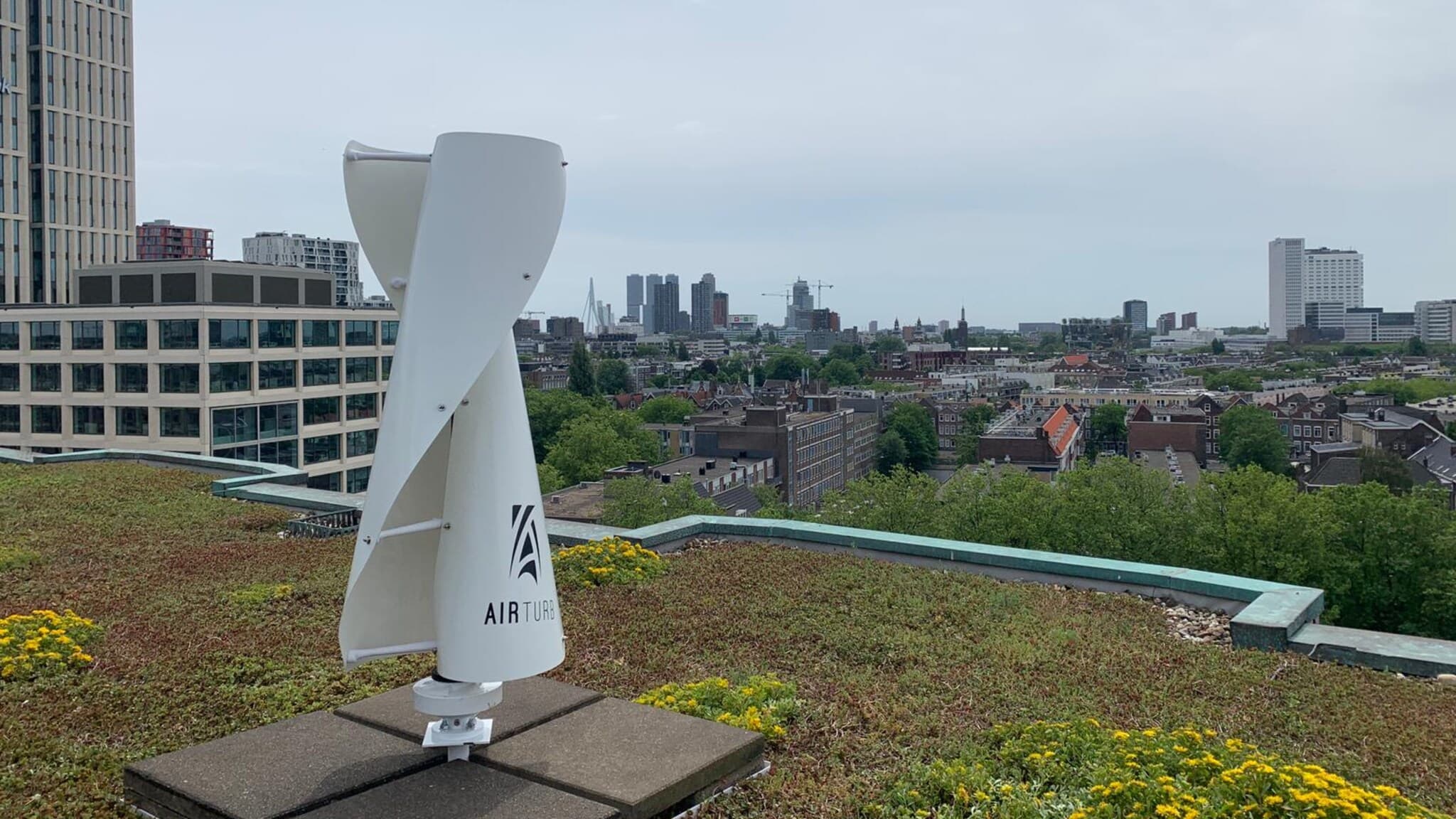

Vertical axis wind turbines have been around for over a century. But the next few years might be the most exciting time in their history. Here's what's being developed right now.
Smarter Blades
The biggest weakness of a VAWT is efficiency. Researchers are closing the gap with smarter blade shapes.
New computer-designed airfoils, the cross-section shape of each blade, are pulling more energy out of each gust. Some prototypes can adjust the blade angle on the fly, twisting each blade as it swings around to grab the most wind from each position.
This is the same trick big airplanes use with their wings during takeoff and landing. Adjusting on the move.
Storing The Power
The wind doesn't blow on demand. Sometimes it howls, sometimes it's dead calm. So pairing VAWTs with batteries has become the standard play.
The turbine charges the battery when wind is strong. The battery delivers power steadily, including during calm hours. A good BMS protects the battery from overcharge.
For an off-grid home, the combo of a small VAWT, a charge controller, batteries, and an inverter is becoming standard.
Better Brains
Modern VAWTs have computers watching everything: wind speed, blade angle, output voltage, temperature, vibration.
Newer "smart" controllers use machine learning to spot patterns. They can predict an incoming gust and pitch the blades just before it arrives. They can detect a worn bearing weeks before it fails, so you fix it on schedule instead of in an emergency.
This kind of predictive control used to be only in million-dollar industrial turbines. Now it's showing up in home-scale designs.
Floating Turbines At Sea
Out at sea, wind is stronger and steadier than anywhere on land. But anchoring a turbine to the seabed in deep water is expensive.
So engineers are building floating platforms instead. The turbine sits on a buoy that's tied down with cables. The platform moves a bit in the waves, but the turbine keeps spinning.
VAWTs turn out to have a surprising advantage here. The low centre of gravity (because the heavy generator sits at the base) makes them very stable on a floating platform. Some companies think floating VAWTs could be the future of offshore wind in deep waters.
Turbines Indoors
This is the weirdest one. Some researchers are testing tiny VAWTs designed to spin from the airflow inside buildings.
Big buildings move massive amounts of air through ventilation ducts. A small VAWT in the duct can recover some of the energy already being pushed around. Same idea for the air being blown out by exhaust fans, or the rush of air created by trains in subway tunnels.
It's a tiny amount of power per turbine. But across a whole city's worth of buildings, it adds up.
→ Read more about VAWT advantages
→ Use the yearly kWh calculator
What sounds futuristic today might be on roofs in five years.