
Catching Flowing Water
Water has been turning wheels for more than 2000 years. The Romans built water mills to grind grain across their empire, and by the Middle Ages half the villages in Europe had a creaking wooden wheel out back, dipping into a stream.
People figured out a long time ago that moving water is patient and strong. It does not get tired. It does not stop at sunset.
Then in 1882, a paper mill owner in Appleton, Wisconsin named H.J. Rogers got an idea. He had a creek behind his factory. He had read about Thomas Edison's new light bulb. Why not run one with the other?
His engineers connected a small turbine to a generator, hooked the wires to a few lamps, and on a September night the bulbs glowed. The plant powered two paper mills and Rogers' own house up the hill.
That was the very first hydroelectric plant on Earth. It made about 12 kilowatts, which today would barely run a microwave. But it was the start of something huge.
Solar would not arrive for another 70 years. Wind turbines for electricity were decades away. Hydro was the first renewable, and it has been quietly running ever since.
The cool thing? The Appleton site is still generating power today. Same creek, newer turbine.
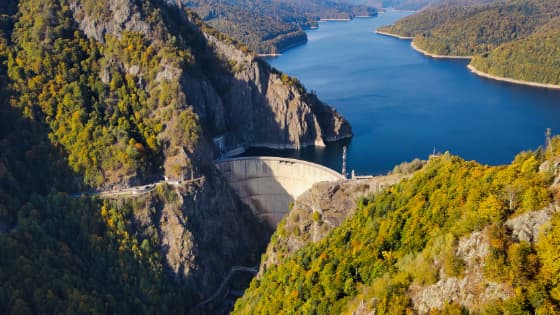
Today, hydro is the largest source of renewable electricity in the world. Bigger than wind. Bigger than solar. Most of that comes from giant dams, but the same trick works at backyard scale. A 3-meter drop and a steady flow is enough to keep the fridge cold, the lights on, and the washing machine spinning. Even at 3am.
What's Happening Inside The Turbine
So how does flowing water actually turn into electricity?
It is the same trick as wind, with one big upgrade. Water is about 800 times heavier than air, so even a slow stream is carrying a lot of energy.
Here is the chain of events:
- Some of the stream is diverted into a pipe (called a penstock). The pipe is like a slide for water.
- The pipe runs downhill. As the water falls, it picks up force.
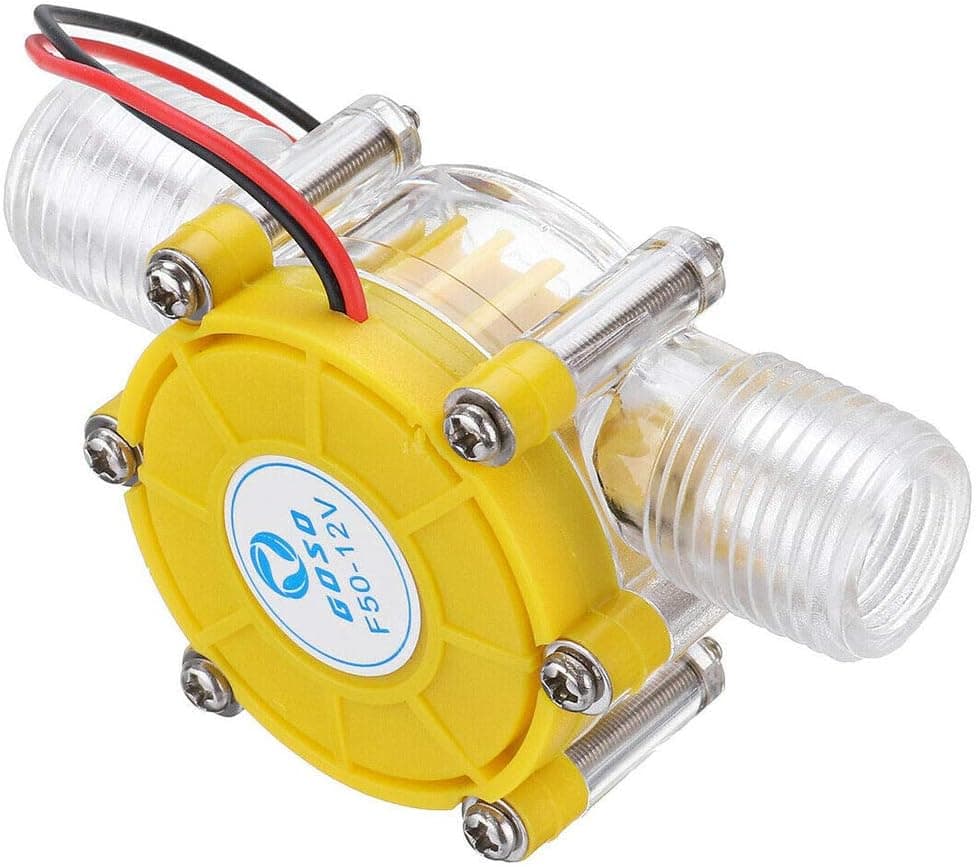
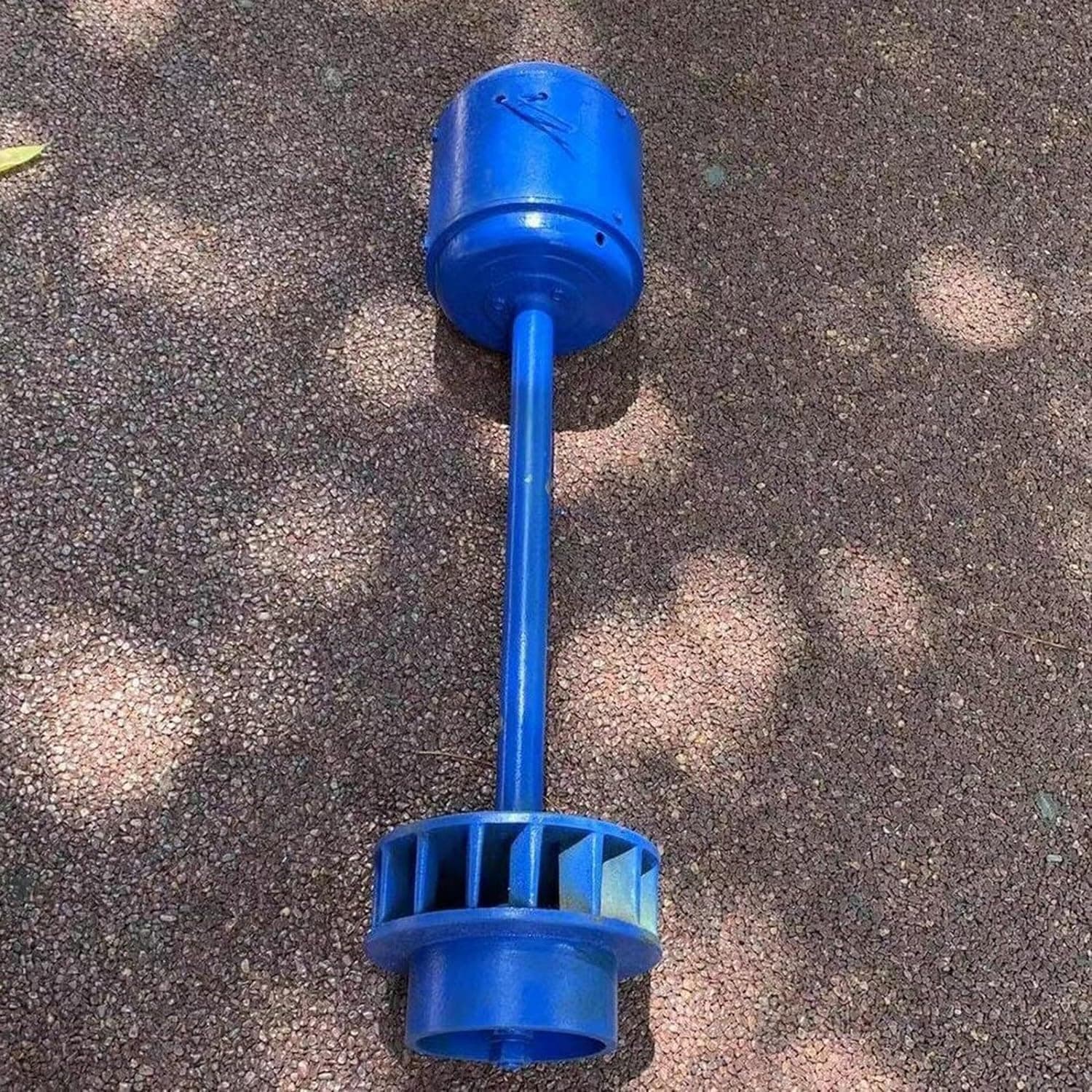
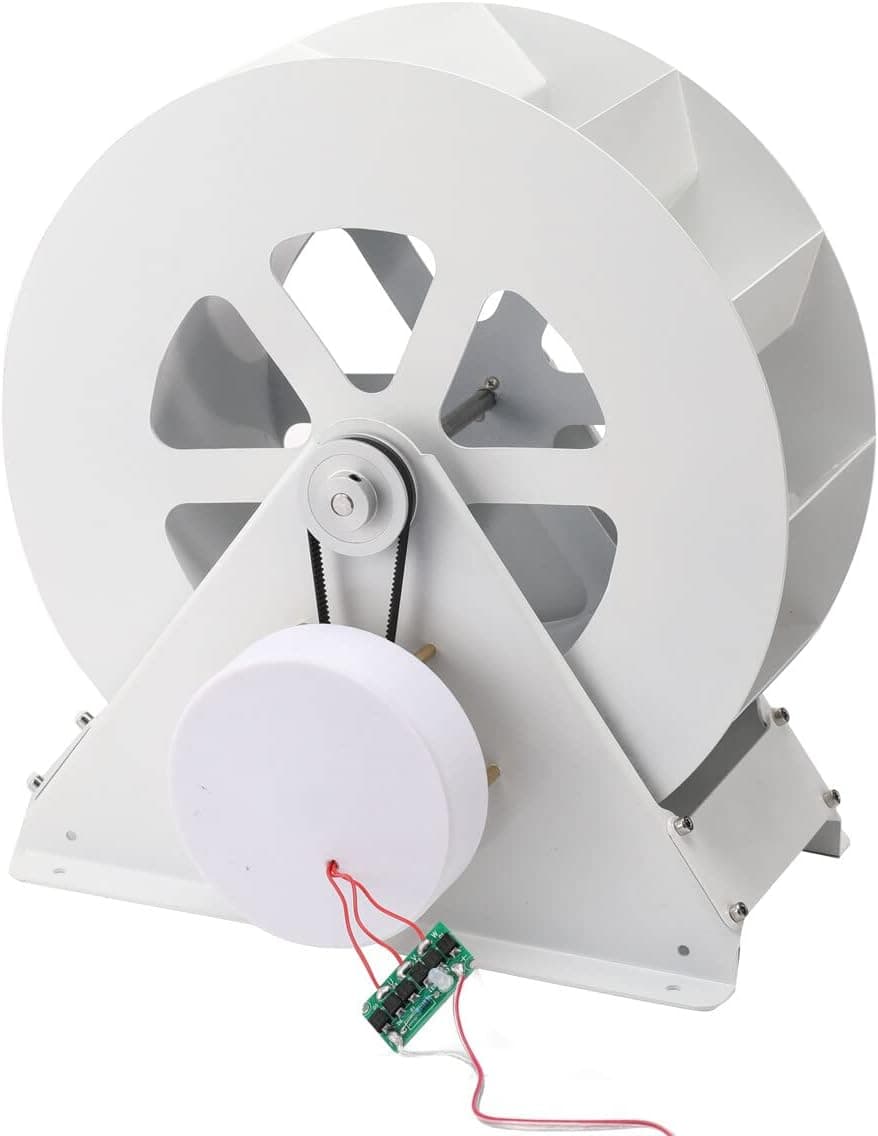
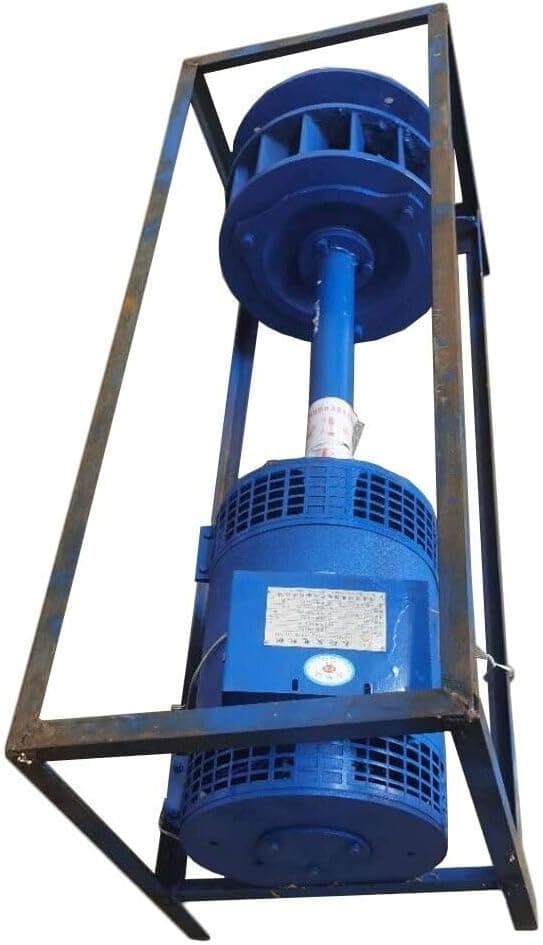
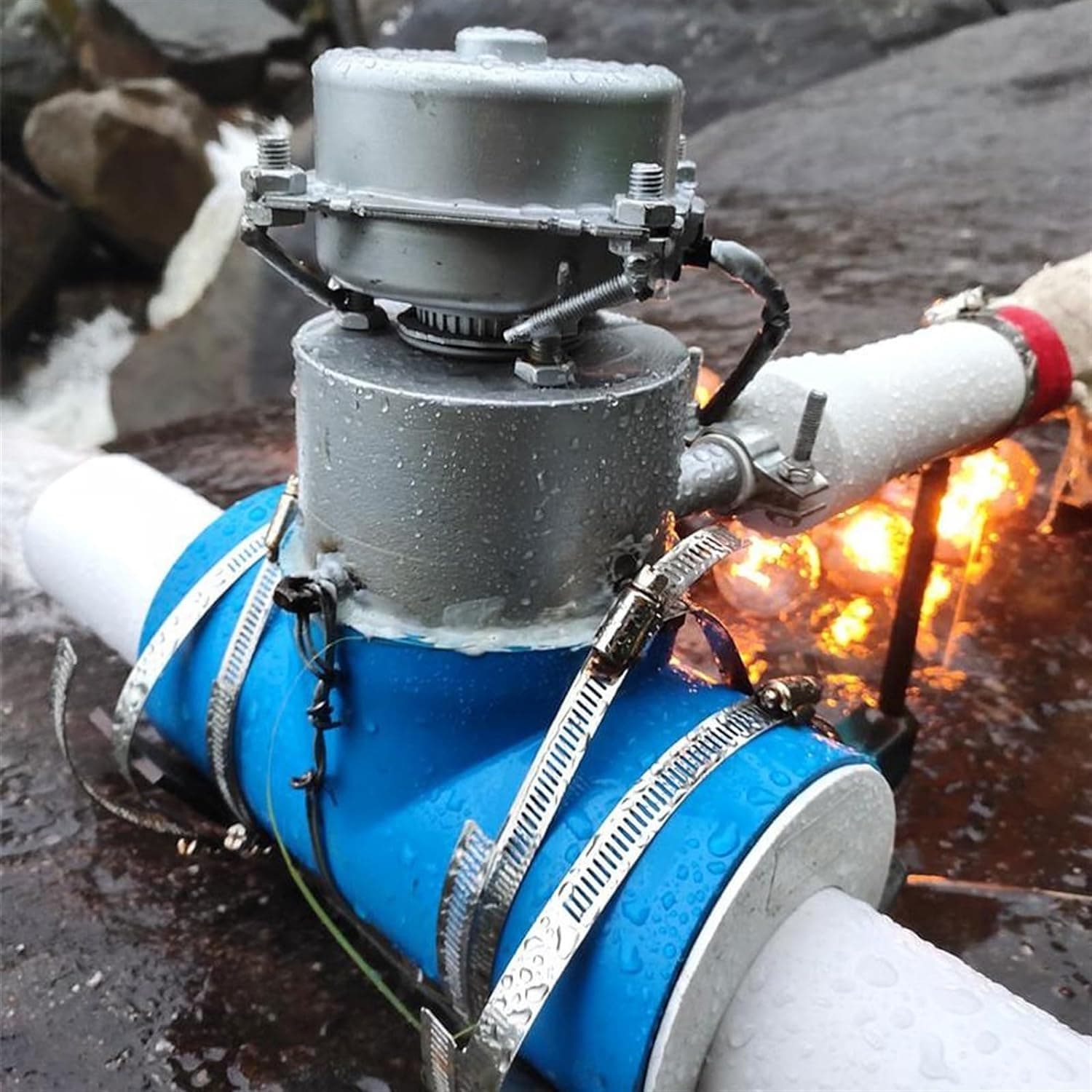
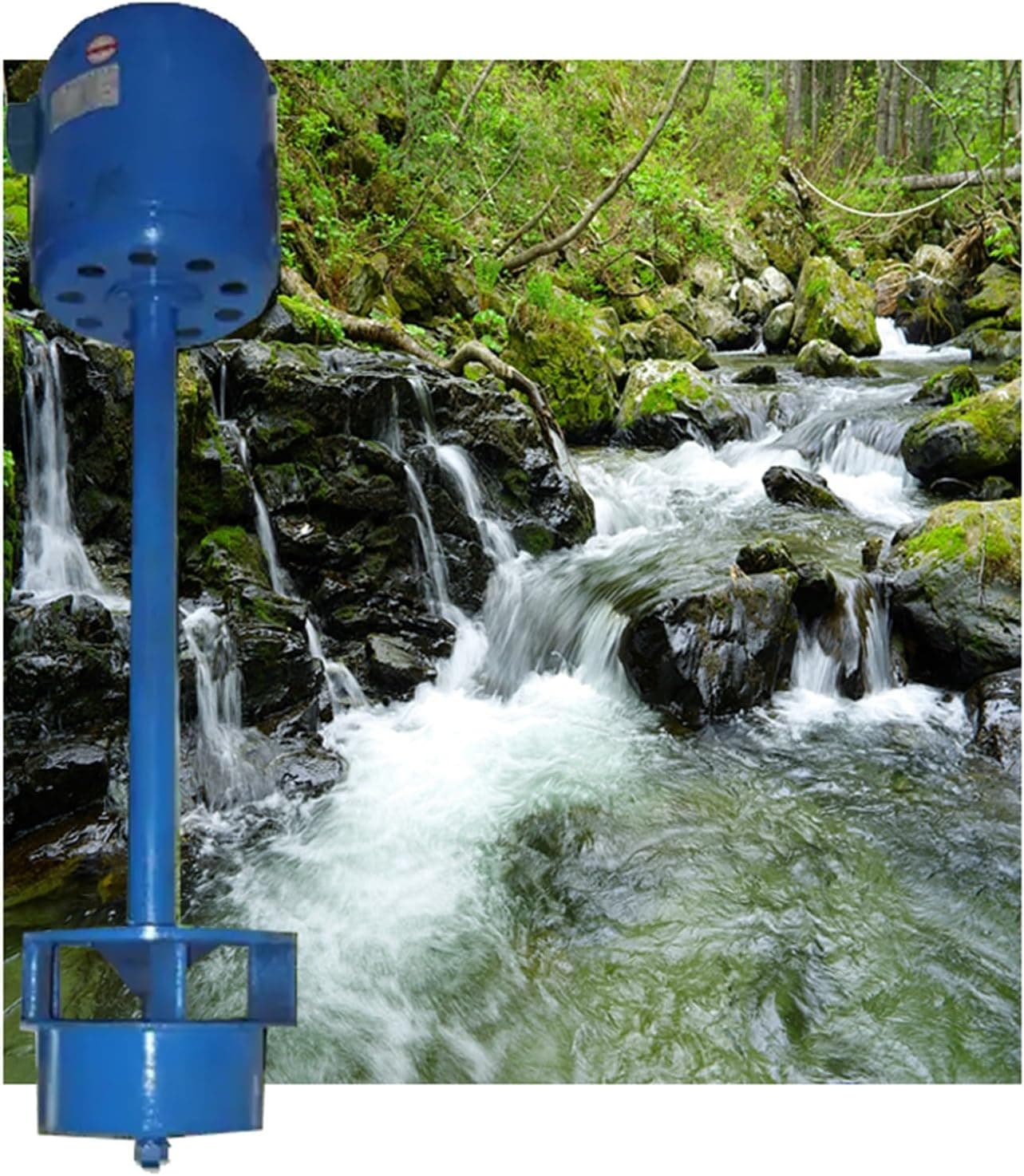
- At the bottom, the water blasts out and hits a water turbine. The turbine is like a fan being spun by water instead of air.
- The turbine is connected to a generator. A generator is just a spinning magnet inside a coil of wire. When the magnet spins, electricity flows out the other side.
After the water passes the turbine, it slides right back into the stream and keeps going. Nothing is used up. The water just lent its motion to your turbine on the way past.
Three Kinds Of Turbines
Not all turbines are the same. Three main shapes show up in home hydro, and picking the wrong one for your stream wastes most of the water's power.
A Pelton wheel looks like a wheel covered in metal cups. A jet of water blasts each cup as it passes. It is like a paddleboat wheel being hit by a fire hose. Best for big drops with small flow, like a stream running down a steep mountain.
A Francis turbine sits inside a sealed casing and looks a bit like a screw with curved blades. Water flows around it and pushes it from all sides. Best for medium drops with medium flow.
For very small drops with a lot of water, people use cross-flow turbines or even an Archimedes screw spinning in reverse. The Archimedes screw is the same shape ancient Egyptians used to lift water out of the Nile, just running backwards.
So which one is for you?
Got a steep mountain stream and a small flow? Go Pelton.
Medium stream, medium drop? Go Francis.
Lots of water but barely any drop? Go cross-flow or Archimedes screw.
→ Every type of water turbine, and when to use each
From Stream To Switch
A turbine by itself isn't useful. The electricity has to make its way from the wheel to your fridge.
So what happens between the stream and the wall socket?
The turbine spins a generator, which puts out raw electricity. That power flows into a small box called a charge controller, which keeps the system safe and tops up a battery.
The battery is small, much smaller than a solar setup would need. It just smooths out the bumps when you suddenly turn on a kettle or the washing machine. Most of the time, the turbine is making power right when you use it.
From the battery, the power flows through an inverter. The inverter is a translator box that changes the turbine's DC into the AC your house actually uses.
Then it goes into your normal electrical panel. Your fridge has no idea the power came from a stream out back. It just runs.
You can also estimate how much power your stream can make with one easy formula. Take the head (the drop) in meters. Multiply by the flow in liters per second. Multiply by 7. That gives you watts.
A 4-meter drop with 30 liters per second of flow: 4 × 30 × 7 = 840 watts. That is enough to run a fridge, a few lights, a laptop, and a TV all at once. Day and night. From a stream behind your house.
Bump the drop up to 10 meters and you get 2100 watts. Now you are running a washing machine too.
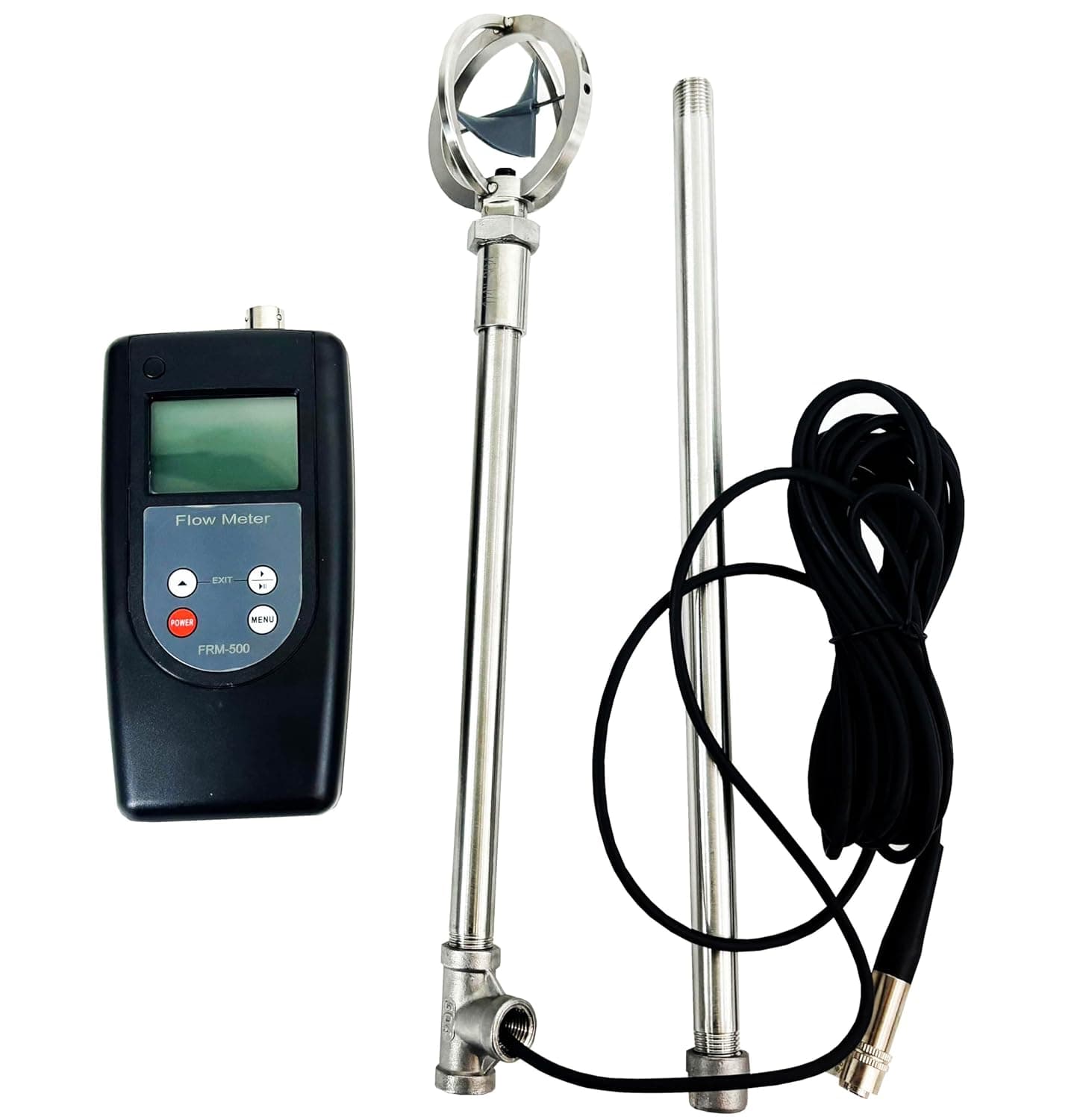
→ How to measure head and flow on your own stream
→ Can your stream actually power your home?
Building The Pipeline
Most of the work of a home hydro system isn't the turbine itself. It is the path the water takes to reach the turbine.
The first piece is the intake. This is a small structure in the stream that catches a little of the flow and sends it into the pipe. It needs a screen to keep leaves, sticks, and fish out of your turbine. A clogged intake is the number one cause of hydro headaches.
Next comes the penstock: the pipe that carries the water from intake to turbine. The longer the drop, the more force the water gathers. Pipe diameter matters. Too narrow and friction eats your power. Too wide and the pipe costs more than it should.
After the turbine, the water exits through the tailrace: another short channel that sends the water back into the stream.
For some setups, you also need a small dam or weir at the intake to keep water levels steady. This is what people mean when they say "civil works", which is the fancy way of saying digging trenches and pouring concrete.
A cheap intake or a flimsy penstock can wreck the whole system. Spring floods are real. Plan for them.
→ The intake and penstock explained
→ Pico, micro, and small hydro explained
Where Hydro Is Heading
Hydro is one of the oldest renewables, but it is still getting better.
New designs of small turbines use direct-drive permanent magnet generators. Older turbines needed a gearbox to step up the speed, which added cost, noise, and wear. The newer generators spin slowly along with the turbine itself, with fewer parts and less to break.
Smart controllers are showing up too. They watch the stream level all day and tweak the load to squeeze the most power out of varying flow. Some can even text you when the intake screen needs cleaning.
Fish-friendly designs are spreading. Standard turbines can hurt fish that swim through them. New shapes like the Alden turbine and modern Archimedes screws let fish pass safely. That matters because most countries are tightening rules about wildlife in streams.
Researchers are also testing modular hydro kits. Pre-built systems you can drop into a creek in a weekend, no civil works required. Early versions are expensive but the prices are falling fast.
What sounds like science fiction today, like a 3D-printed turbine sized for your specific stream, might be in catalogs in five years.
Going Off-Grid With Hydro
Hydro is the best off-grid power source on Earth, but only if your land actually has water flowing through it.
Most people don't qualify. Solar works almost anywhere there is sky. Wind works almost anywhere there is space. Hydro is location-locked. If you do have a stream with real drop and steady flow, though, this is the gold standard.
Before you start, three things to think about.
Water rights. In most countries, you do not actually own the water flowing through your land. The river belongs to everyone, or to the state. So even if you have the perfect stream, you usually need a permit before you can divert any of it. In the US, every state has its own rules. In the UK, the Environment Agency handles it. In the Netherlands and Germany, the local water board signs off. Get this wrong and you can be fined, or forced to rip everything out.
The dry season. A creek that roars in spring might be a trickle in August. Measure the flow at the worst time of year, not the best. A system sized for spring flow will starve in late summer.
Cost vs payback. A small pico-hydro kit (under 1 kilowatt, enough for lights and a fridge) can cost $1500 to $4000. A real micro-hydro system (3 to 10 kilowatts, enough to run a whole house) usually lands somewhere between $4000 and $30,000 installed. The wide range is almost all civil works. After the build, the electricity is essentially free for 30 to 50 years.
→ Why you probably need a permit, and how to get one
→ The full cost breakdown for a home hydro system
→ How hydro stacks up against solar and wind
Why People Pick Hydro
Here is what makes hydro different from every other renewable.
Solar stops at night. Wind stops when the air is calm. Hydro keeps going. As long as the stream flows, the power flows. That means you barely need batteries. Most off-grid solar setups need a big expensive battery bank to bridge the dark hours. With hydro, a tiny battery just to smooth out the bumps is enough.
That is a huge deal. Batteries are often the most expensive part of an off-grid setup, and they wear out after 10 to 15 years. A hydro turbine can run for 30 to 50 years with a little maintenance.
The catch? Hydro is location-locked. Most people don't have a stream. If you are one of the lucky few who does, this is the most reliable off-grid source you can get.
It runs 24/7. It needs almost no batteries. It lasts decades. It is quiet. It does not care about the weather.
The setup is more work than slapping solar panels on a roof, but if your stream qualifies, the payoff is huge. Steady free power for the rest of your life.
→ Work out how much electricity your home actually uses